

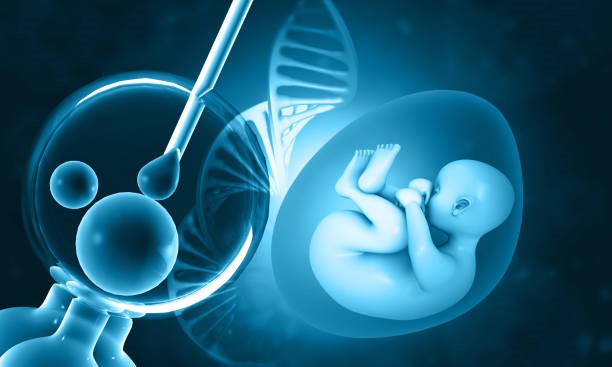
Many couples still find it difficult to procreate long after marriage. This may be as a result of various medical challenges. This has created great concern especially in African families where children are taken as the reason for marriages.
The In Vetro Fertilization (IVF) has assisted many families in getting children of their own. IVF fertility procedure that involves combining a woman’s eggs and a man’s sperm in a laboratory dish especially for women who are having difficulty conceiving. In vitro fertilization is the most commonly utilized assisted reproductive technology. It involves the collection of oocytes from the ovary, followed by fertilization in vitro, and is completed with transferring the resulting embryo into a uterus. Examples of in vitro fertilization (IVF) and its possible expansions, include; artificial insemination. artificial reproduction, and cloning.
In fertilization, the sperm and uterus work together to move the sperm towards the fallopian tubes. If an egg is moving through the fallopian tubes at the same time, the sperm and egg can join together. The sperm has up to six days to join with an egg before it dies. When a sperm cell joins with an egg, it’s called fertilization.
While the IVF cycle itself only takes around four weeks, the full process (including preconception health regimen and fertility testing) can take up to four months, from the initial consultation to when the first beta hCG test has been carried out to see if one is pregnant.
Sex selection is possible through the use of IVF embryos. A couple or individual can choose the genetic sex of a child; boy or girl, by testing the embryo(s) created through IVF before one is implanted in the uterus.
Multiple births can also be developed through in vitro fertilization when more than one embryo is put back into the mother’s womb. Identical twins can be developed even when only one embryo is put back into the womb.
Available research shows that IVF babies are generally as healthy as naturally conceived babies. However, it is essential to consider individual factors such as parental age and underlying fertility issues that may influence health outcomes.
There have also been concerns as to whether women who have had IVF treatment (whether successful or not) may be at risk of long term health problems. Fortunately, researches show that such fears are largely unfounded.
In the future, it is likely that a type of genetic engineering that will enable changes to the DNA of organisms will be discovered. This may lead to future children being ‘chosen’ or ‘designed’ with far greater levels of prevision than at present.


