

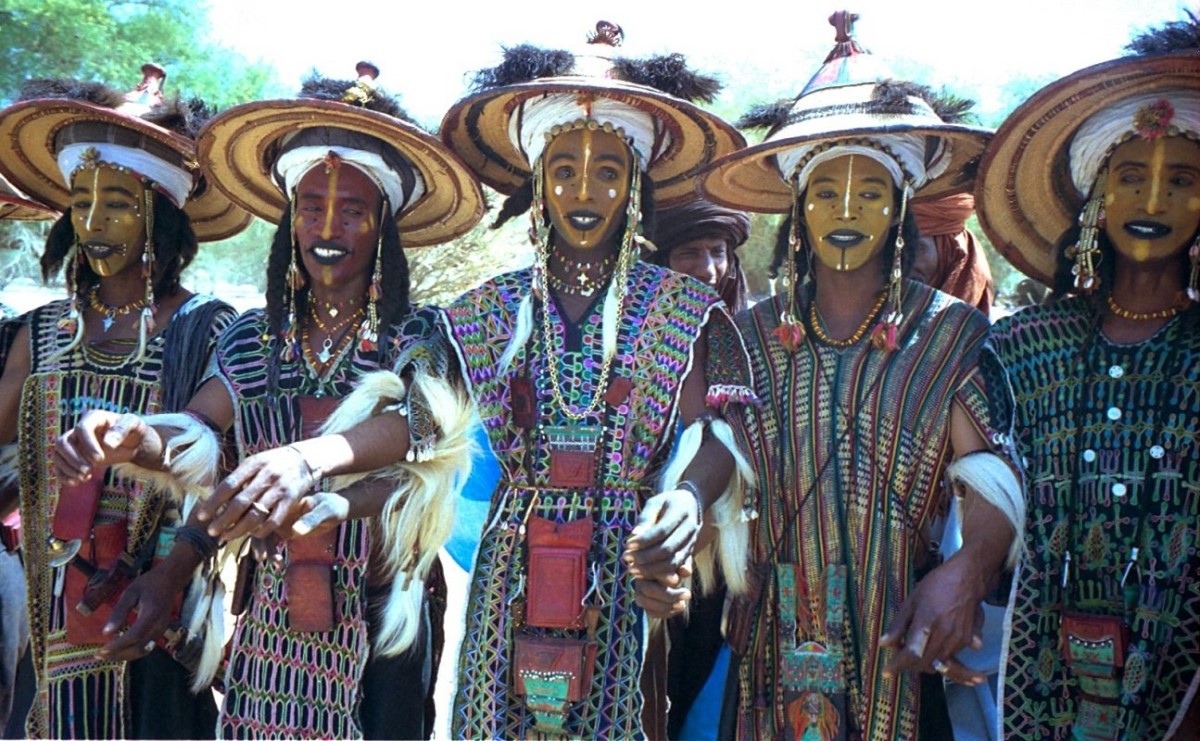
There are hundreds of different ethnic groups in Nigeria. Out of these, the largest is the Hausa. Hausa tribe is constituted by approximately 25 percent of the Nigerian population. The percentage of some other ethnic groups in Nigeria are Yoruba 21%, Igbo 18%, and Ijaw 10%,Kanuri 4%, Ibibio 3.5%, and Tiv 2.5%.
The Hausa are the biggest ethnic group in Nigeria with an estimate population of about 67 million. The Hausa culture is homogenized, that is to say that the Hausa culture is extremely similar. Hausa are known for raising cattle and other stock, growing crops and trading. They are also recognized for practicing Islam as their main religion. Being the largest ethnic group in Nigeria, Hausa have always been some of the main players in Nigerian politics since Nigeria was granted independence from Britain in 1960.
Hausa people, found chiefly in Northwestern Nigeria and adjacent Southern Nigeria. They constitute the largest ethnic group in the area, which also contains another large group, the Fulani, perhaps one-half of whom are settled among the Hausa as a ruling class, having adopted the Hausa language and culture. The language belongs to the Chadic group of the Afro-Asiatic (formerly Hamito-Semitic) family and is infused with many Arabic words as a result of Islamic influence, which spread during the latter part of the 14th century from the kingdom of Mali, profoundly influencing Hausa belief and customs. A small minority of Hausa, known as Maguzawa, or Bunjawa, remained pagan.
Hausa society was, and to a large extent continues to be, politically organized on a feudal basis. The ruler (Emir) of one of the several Hausa states is surrounded by a number of titled officeholders who hold villages as fiefs, from which their agents collect taxes. Administration is aided by an extensive bureaucracy, often utilizing records written in Arabic.
The Hausa economy has rested on the intensive cultivation of sorghum, corn (maize), millet, and many other crops grown on rotation principles and utilizing the manure of Fulani cattle. Agricultural activity has yielded considerably more than subsistence, permitting the Hausa to practice such craft specializations as thatching, leatherworking, weaving, and silversmithing. The range of craft products is large, and trading is extensive, particularly in regularly held markets in the larger towns. Hausa are also famous as long-distance traders and local vendors of Hausa-made leather goods as well as tourist items.


