

The journey to greatness is no doubt premised on dedication and commitment towards achieving set goals. However, our dreams and destinies may differ due to our background and beliefs. But the attainment of greatness and virtue is always the bottom line. While some are born great, some achieve greatness, while some have greatness thrusted upon them.
In the words of Robert Schuller, “Success is not a product of fate, chance or luck. But the result of a burning desire that knows the way to defeat”.
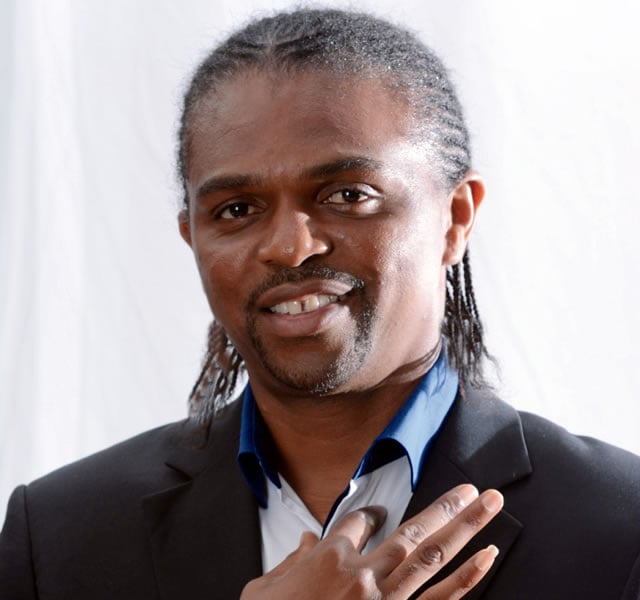
Kanu Chirstian Nwosu Nwankwo, born on August 1st 1976 in Owerri, but hails from Abia State, Nigeria, represents one of the notable talents whose dedication and commitment towards achievement of greatness cannot be overemphasized.
As a young lad who believed in the beauty of his dreams, he cut his teeth as a rookie with the now defunct first division club, Federation Works F.C, Owerri before switching over to Iwuanyanwu Nationale F.C of Owerri in Imo State (now known as Heartland F.C) in 1992. There, he caught the attention of the then Golden Eaglets coach, Fanny Amun through his awesome and fanciful displays in the local league. He was drafted into the U-17 national team where he subsequently made the squad that represented the country in September 1993 at far away Japan. He, alongside team captain Wilson Oruma, Karibe Ojigwe, Celestine Babayaro, Blessing Anyanwu, Mobi Oparaku, among others shocked the world, and went on to lift the coveted U-17 World Cup trophy, and in which he played a pivotal role leading up to the triumph.
This heroic performance at the U-17 world cup opened up his horizons to another level of his career. As such, the fall out of that historic feat gave room for his transfer to Ajax Amsterdam F.C. of Holland; one of Europe’s elite clubs in that era, still in 1993. There, he was not lonely as he found good company in his senior, more experienced compatriot, Finidi George.
Playing together with football greats such as Edwin Van Der Sar, Patrick Kluivert, Edgar Davids, Clarence Seedorf, Danny Blind, Ronald Koeman, the De Boer brothers among others, Kanu’s Ajax triumphed over a star-studded, experienced AC Milan team featuring the likes of the legendary Paolo Maldini, Franco Baresi, George Opong Weah, among others, in the 1994/1995 UEFA Champions League final match. Not long after, they lifted yet another prestigious trophy in the mold of the World Club Cup.
Furthermore, Kanu won an unprecedented three consecutive Dutch League titles while at Ajax. At this stage, Kanu was believed to have embraced acceptable leadership qualities and experience which set him higher in the midst of his contemporaries. A year later, Kanu at the young age of 22, captained the Nigerian U-23 team tagged “The Dream Team” to Atlanta, Georgia in the USA; venue of the 1996 Olympic Games. Under the tutelage of Dutchman, Bonfrere Jo, He led the team consisting of established, seasoned stars like Uche Okechukwu, Taribo West, Sunday Oliseh, Austin “Jay Jay” Okocha, Emmanuel Amuneke, Victor Ikpeba, Tijani Babangida, among others, to win gold at the football event; the first of its kind in Africa. On the way to achieving the success, they subjugated dreaded football playing nations like Brazil, Argentina and Mexico.
Kanu’s performance did not go unnoticed as he was consequently named the African Footballer of the Year and the sixth best player in the world by CAF and FIFA respectively. This awesome feat achieved by Kanu opened up another level in his career as he was subsequently snapped up by Inter Milan F.C of Italy where he featured alongside South American legends: Ronaldo De Lima, Ivan Zamorano and a host of others.
Consequently, It is often said that the journey towards greatness and achievement of virtue is often times characterized with challenges, and that success can only be measured in the ability of an individual to defeat such challenges. However, as glorious as Kanu’s football career was, a dark chapter which short lived the excitement unfortunately emerged, dampening the hope and expectations of many. He was diagnosed of a heart defect which according to medical experts, would end his fast-blossoming football career.
Perhaps it was the most difficult period of Kanu’s entire life. He left the game for a while in search of a way out of the situation. In fact, the football world watched with absolute apprehension and there was evident disquiet over the fate of the prodigiously talented lad. However, to the glory of God Almighty, he defied medical prognosis, bouncing back to the game powerfully after a heart surgery in Cleveland, USA.
Sequel to him being certified fit enough to play football again, Kanu left Inter Milan F.C. for Arsenal F.C of England. His arrival in England gave him an opportunity to work under Arsene Wenger who breathed a new life into him and the rejuvenated Kanu exploded in the process, scoring magical goals! One moment that remains indelible in the minds of football followers was his hat-trick against Chelsea in a league match at Stamford Bridge. The Gunners were trailing by two goals, and then he turned on the style, mesmerizing world class defenders like Marcel Desailly and Frank Lebouef. Kanu’s heroics swung the match in Arsenal’s favour (3-2). Indeed, Kanu’s best football was played while putting on the Arsenal jersey. He went on to win two Premier League and FA Cup titles apiece and a UEFA Cup trophy.
On leaving Arsenal, Kanu moved to Westbromich Albion where he gave a good account of himself after which he proceeded to Portsmouth F.C. shortly before the commencement of the 2006/2007 Season. Suffice it to say that, in the twilight of his Arsenal career and up until his move to Portsmouth, he was being courted by clubs within and outside Europe but he turned all of them down preferring to remain in England for reasons best known to him.
Notably, the highpoint of his Portsmouth career was when he scored consecutively in the semi-final and final of the FA Cup against Westbromich Albion and Cardiff City FC respectively, landing them the glamorous trophy in the 2007/2008 season. Incidentally, both were 1-0 victories and it can therefore be asserted that Kanu single-handedly landed Portsmouth the FA Cup trophy perhaps; the third in his career.
It is on record that this legend appeared in three world Cups for Nigeria: France 1998, Korea-Japan 2002 and South Africa 2010.This is in addition to representing Nigeria in six African Nations Cups from Nigeria/Ghana 2000 to Angola 2010, surpassing the record set by the late Muda Lawal albeit he never registered a goal in any of them. Just like in 1996, his excellent performance in the year 2000 edition earned him the African Footballer of the Year award once again.
This sensational footballer of our time, Kanu scored 13 goals in 86 caps for Nigeria, and unarguably remains Nigeria’s most decorated player and Africa’s second most decorated player in history just behind Cameroon legend, Samuel Eto’O Fils.
Beyond football, Kanu Nwankwo is an ambassador of notable bodies like UNICEF, UN, NFF etc. He is also a philanthropist which is evident in his pet project – Kanu Heart Foundation – which he established not too long after surmounting his heart challenges. He was inspired to give back to the society in this way, after weathering the storm. Ever since then, he has sponsored a plethora of African heart patients, predominantly kids, to different parts of the world to have life-saving heart surgeries and the number is still counting as I write this discourse.
To crown it up, it can thus be said that honour was indeed given to whom it was due. Kanu deserves all he got now and even more. He served the nation wholeheartedly as his commitment was never in doubt. In an era when other famous soccer stars around the world are getting so much attention in the headlines for the wrong reasons mostly due to their involvement in all sorts of immoral, scandalous acts, Kanu has stayed out of trouble. He can easily pass for a role model to the young kids globally.
Against all odds, Kanu Nwankwo popularly called Papilo was not just a legend on the pitch but a great personality on and off it.


