
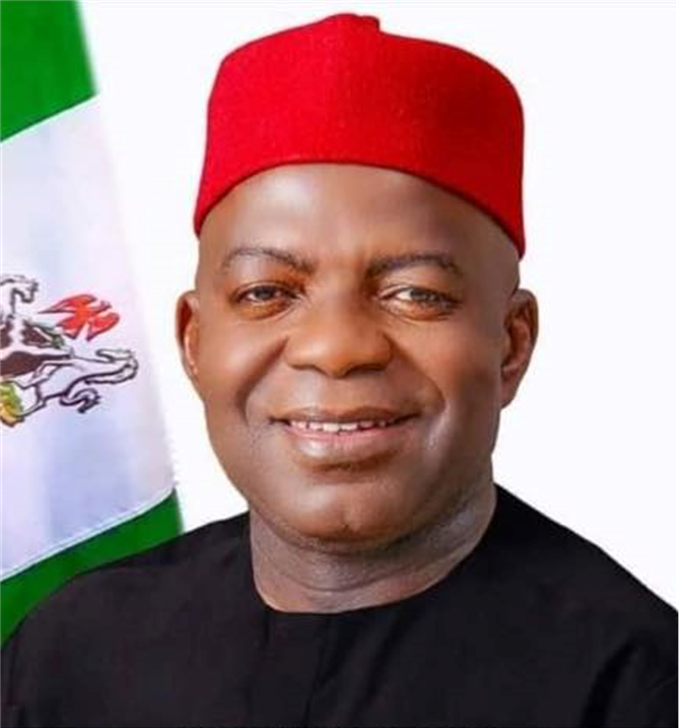
In the annals of Nigerian governance, few leaders have demonstrated the transformative vision, unwavering commitment, and tangible impact that Dr. Alex Chioma Otti, OFR, the fifth democratically-elected Governor of Abia State, has exhibited since assuming office on May 29, 2023.
His tenure as governor has not only revitalized Abia State but also set a national benchmark for governance, inspiring hope and progress across Nigeria. His extraordinary contributions to the people of Abia State and the broader Nigerian populace cannot be quantified.
Governor Alex Otti’s administration has been a beacon of hope, breaking decades of stagnation in Abia State through strategic policies, innovative governance, and an unrelenting focus on the welfare of the people.
His achievements span infrastructure, economic development, education, healthcare, security, and social welfare, each leaving an indelible mark on the lives of Abians and Nigerians at large.
One of the hallmark achievements of Governor Otti’s administration is the transformative overhaul of Abia State’s infrastructure, particularly its road networks. Prior to 2023, Abia’s roads, especially in commercial hubs like Aba, were synonymous with decay, impeding economic activities and diminishing the quality of life.
Since taking office, Otti has overseen the completion of over 140 road projects across the state’s three senatorial zones, including urban centers and rural communities. Notable projects include the rehabilitation of Jubilee Road, Queen’s Street, and Ehi Road in Aba, as well as the full reconstruction of Shalom Road, Cemetery Market Road, and Emelogu Street, complete with streetlights to enhance security and extend commercial hours.
The reconstruction of the Port Harcourt-Aba section of the Port Harcourt-Enugu Expressway, in collaboration with the Federal Government, and plans for the Aba-Owerri Road underscore Otti’s commitment to strategic connectivity.
These projects have reduced travel times, boosted trade, and restored Aba’s status as the commercial nerve center of the Southeast. Rural communities, previously isolated by impassable roads, now enjoy improved access to markets and services, fostering economic inclusion.
For instance, the reconstruction of Old A3 at Obehie in Ukwa West LGA has revitalized local economies, demonstrating Otti’s holistic approach to development.
The ripple effects of this infrastructure revolution extend beyond Abia. By enhancing connectivity, Otti’s projects have facilitated inter-state commerce, benefiting traders and businesses in neighboring Imo, Rivers, and Akwa Ibom states.
The improved road networks have also attracted investors, positioning Abia as a viable destination for industrial and commercial ventures, thus contributing to Nigeria’s broader economic growth.
Governor Otti’s background as a seasoned economist and former Group Managing Director of Diamond Bank has informed his economic policies, which prioritize job creation, entrepreneurship, and investment.
His administration has pursued partnerships with international and local investors to drive industrial growth. A significant milestone was his invitation to Sinoma Company to establish a factory in Abia, signaling the state’s openness to partnerships that foster economic development.
Otti’s focus on agro-industry development aims to reduce food costs and create jobs through domestic production and exports.
His policies have empowered small and medium-scale enterprises, particularly in Aba, where the revitalized road infrastructure has boosted trade. The introduction of skills training programs for women and youth in technology and small business development has equipped Abians with the tools to thrive in a competitive economy.
Nationally, Otti’s economic policies have set a precedent for state-led industrialization. By creating an investor-friendly environment, Abia has become a model for other states, demonstrating how strategic governance can drive economic diversification and reduce dependence on federal allocations.
This has inspired a renewed focus on sub-national economic development across Nigeria, contributing to the country’s quest for self-sufficiency.
Education is a cornerstone of Otti’s vision for a prosperous Abia. His administration has prioritized the restoration of dilapidated educational institutions and the enhancement of academic standards.
A landmark achievement was the restoration of accreditation for the Abia State University Teaching Hospital (ABSUTH), which had been lost for three years prior to his tenure. This has ensured that medical students can complete their training without disruption, strengthening the state’s healthcare workforce.
Otti’s approval of a 10-megawatt independent power project for Abia State University (ABSU) is a game-changer, ensuring a stable power supply to support academic and research activities.
His on-the-spot assessment of educational institutions, coupled with apologies to students for past neglect, reflects his commitment to accountability and excellence.
These efforts have restored confidence in Abia’s educational system, attracting students from across Nigeria and reducing the brain drain of talent to other states or countries.
The national impact is evident in the renewed hope among Nigerian youths, who see Otti’s reforms as a model for addressing systemic challenges in education. His emphasis on merit-based appointments and professional engagement in governance has inspired other states to prioritize competence in educational administration.
Otti’s administration has made significant strides in healthcare, addressing long-standing issues of access and quality. The rehabilitation of ABSUTH has positioned it as a major reference center in the Southeast, serving patients from Abia and neighboring states.
His commitment to sustaining the infrastructural transformation of the health sector, as outlined in the 2025 budget, ensures that Abians have access to quality medical services.
By prioritizing the welfare of civil servants, including healthcare workers, through prompt salary payments and the clearance of arrears, Otti has boosted morale and service delivery in the sector.
These improvements have reduced the burden on federal healthcare facilities and enhanced Nigeria’s overall healthcare capacity, as Abia’s revitalized institutions now serve a regional clientele.
Governor Otti’s administration has placed a premium on the welfare of Abia’s citizens, particularly civil servants and pensioners. His clearance of salary and pension arrears inherited from previous administrations has alleviated financial distress for thousands of families, restoring dignity to retirees and public workers.
The prompt payment of salaries has set a new standard for governance, earning Otti widespread acclaim.
His decision to lift a 10-year promotion embargo at Abia Polytechnic and revisit the wrongful disengagement of 154 state workers, mostly teachers, demonstrates a commitment to fairness and equity. These reforms have empowered Abians, fostering a sense of inclusion and trust in governance.
Nationally, Otti’s welfare policies have challenged other governors to prioritize the well-being of their citizens, contributing to a broader discourse on social justice in Nigeria.
Otti’s administration has reaffirmed its commitment to protecting lives and property in Abia, addressing security challenges that once plagued the state. His hands-on approach to governance, including strategic partnerships with security agencies, has restored peace and stability, enabling economic activities to thrive.
Importantly, Otti has debunked false claims of enlisting separatist groups for security, clarifying his reliance on legitimate forces to safeguard Abians.
This focus on security has national implications, as a stable Abia contributes to regional peace in the Southeast, a region historically fraught with unrest. Otti’s model of community engagement and transparent security policies offer lessons for other states grappling with similar challenges.
Otti’s leadership is defined by transparency, accountability, and a rejection of political distractions. His dismissal of defection rumors and focus on governance over politics underscore his dedication to the people’s mandate.
His administration’s timely execution of projects, as evidenced by the swift passage and signing of the N750 billion 2025 budget, reflects a serious-minded government committed to delivering on its promises.
The allocation of 82% of the 2025 budget to capital expenditure highlights Otti’s prioritization of infrastructure and development, setting a national example for fiscal discipline and strategic planning.
His emphasis on merit-based appointments has fostered a culture of competence, inspiring other Nigerian leaders to adopt similar standards.
Impact on the Lives of Abians and Nigerians.
The positive impacts of Governor Otti’s administration have profoundly transformed the lives of Abians and resonated across Nigeria. In Abia, improved roads have reduced commuting times, boosted trade, and enhanced access to markets, directly improving livelihoods.
The revitalization of Aba has restored its economic prominence, creating jobs and attracting investment.
Educational and healthcare reforms have empowered youths and ensured better health outcomes, while welfare policies have alleviated poverty and restored dignity to civil servants and pensioners.
Nationally, Otti’s leadership has redefined expectations of governance. His infrastructure revolution has inspired other states to prioritize development, while his economic policies have contributed to Nigeria’s industrialization agenda. The stability in Abia has bolstered regional security, and his transparent governance model has challenged the status quo, fostering a renewed sense of possibility among Nigerians.