
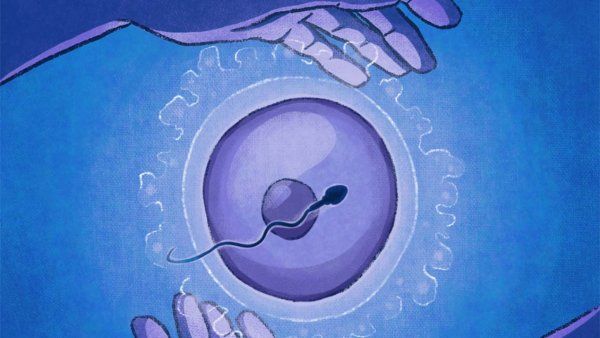
Many Nigerian spouses are encountering challenges from infertility. Many marriages have broken as a result of this while some are still battling with the solutions to the problem. The Qoheleth looks into this problem to identify the causes and solutions as well as the places where it can be treated.
Infertility is a condition of reproductive system that causes men not to impregnate women and women to be unable to get pregnant (conceive). It is a disease characterized by the failure to establish a clinical pregnancy after a period of one year of regular unprotected sexual intercourse. Causes of infertility can include ovulatory disorders, endometriosis, low sperm count or low testosterone. The risk of infertility increases as one ages.
Reproduction takes this process. The brain usually produces reproductive hormones that control ovarian functions. At this time, an egg must have matured in the ovary and released to the fallopian tube to pick. On the other hand, sperm is released from the male specie, which travels up from the vagina through the uterus to the fallopian tube to meet the egg. It then fertilizes the egg to create an embryo. The embryo then travels through the fallopian tube to the uterus (womb) where it implants or what you refer to as pregnancy.
Any obstruction of this process through one way or the other results to infertility. This may be diagnosed within 12 months of trying to conceive. This comes after trying to produce a baby after having an unprotected sex at the appropriate period.
There are many types of infertility. Primary infertility occurs when one tries to get pregnant after regular unprotected sex but could not for a period of one year.
Secondary infertility occurs when a woman can’t get pregnant after having at least one successful pregnancy.
Unexplained infertility comes when a fertility test has been conducted and no reason is found why a couple is unable to produce a baby.
Infertility affects both men and women. Infertility is very common. It has been described as the most important reproductive health concerns of Nigerian women. Survey shows that there are between 5-8% of couples with infertility problem. Infertility has caused homes to be broken in Nigeria over the years.
The main sign of infertility is being unable to get pregnant after six months or one year of regular, unprotected sex. You may not have any other symptoms. But some women or men may show physical symptoms such as pelvic or abdominal pain, irregular vaginal bleeding, irregular periods or no periods and penile disorders or issues with ejaculation.
There are many causes of infertility, and sometimes, there isn’t a simple answer as to why one is can’t get pregnant. Some causes of infertility affect just one partner, while others affect both partners. Infertility can be caused by eating disorders, which includes anorexia nervosa and bulimia. Others include excessive alcohol consumption, exposure to environmental toxins, such as chemicals, lead and pesticides, over-exercising, and radiation therapy or chemotherapy.
It can also be caused by Sexually Transmitted Infections (STIs), smoking and using tobacco products, (This behavior plays a role in about 13% to 15% of infertility cases.), substance abuse, having obesity or being underweight and abnormalities of the hormone-producing centers of the brain (hypothalamus or pituitary).
Ovulation disorders are the most common cause of infertility in women. Ovulation is the process in which ovary releases an egg to meet sperm for fertilization. Other causes in women are endometriosis, structural abnormalities of the vagina, uterus or fallopian tubes, polycystic ovary syndrome (PCOS), Primary ovarian insufficiency or poor egg quality as well as kidney and pelvic inflammatory disease.
Fertility problems can be treated in Nigeria. There are also many fertility specialists in many cities in the country. A fertility specialist is a medical professional who specializes in diagnosing and treating fertility problems, in order to help people who have been unsuccessfully trying to have a baby. Fertility specialists treat conditions associated with both male and female infertility.
Some of the best fertility specialists in the country are Drs. Michael Ogunkoya, Taofeek Olabode, Olabisi Olanrewaju, and Akinloye Anthony Bamigboye. Others are Drs. Olatunji Yussuf Ogungbe, Kelechukwu Nwokoma, Olutayo Alalade and Uzoma Otutoaja.
Fertility can also be treated through the following processes by the specialists;
-
- Ovulation cycle tracking
- Ovulation induction
- Artificial insemination (AI)
- In vitro fertilization (IVF) treatment
- Intracytoplasmic sperm injection (ICSI) treatment
- Time-lapse imaging
- Preimplantation genetic diagnosis (PGD)
- Fertility surgery
- Fertility preservation