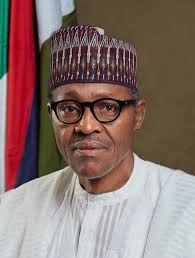
By The Qoheleth
If you ask an average Nigerian the greatest challenge in the country, they will tell you it is political leadership. Politics in Nigeria is regarded as a dirty game filled with corruption, intrigues, deceit, and indiscipline. If you ask some people the solution to the challenge, some will say it is to divide the country into regions so that each region would cater for itself, manage and share its resources among itself. Some will suggest killing all the politicians through violent revolution and replacing them with other patriots. Some others will call for military intervention, like what happened in Ghana and Burkina Faso. Many others are just standing on the wall, while others flee to other countries for greener pastures.
One of the Nigerian leaders who had practically taken a bold step to resolve this great challenge militating against the greatest country in Africa was Muhammadu Buhari. A close study of the life of Buhari would reveal that his goal and mission throughout his life were to redeem Nigeria from the clutches of corruption and indiscipline implanted by the past and present politicians. Unfortunately, he was consumed by the mission he devoted his life to.
Corruption has been a problem in Nigeria for a long time. It was, for instance, the subject of General Murtala Mohammed’s coup in 1975, and subsequently part of the reasons given for every other military intervention.
Large-scale corruption, indiscipline, and lawlessness pervaded the first, second, and subsequent governments in Nigeria. At one point, Nuhu Ribadu, former chairman of the Economic and Financial Crimes Commission (EFCC), estimated that over $380 billion has been expropriated by Nigeria’s political and military leaders since oil sales began in the 1970s.
Given the ubiquity of the problem of corruption, former President Obasanjo’s first executive bills sent to the National Assembly when he was elected a civilian president was an anti-corruption bill. He promised to tackle the problem head-on. As a result, the Independent Corrupt Practices Commission (ICPC) and the EFCC, among others, were established. He was consumed by the same corruption he went to fight.
Unfortunately, the fight against corruption has been fraught with problems, and as a result, the tide of corruption is nowhere near waning. According to the U.S. State Department, corruption in Nigeria was massive, widespread, and pervasive, and there is a culture of impunity for political and economic crimes that must be reversed if development is to be sustained.
This was the challenge Gen. Buhari took as his mission and goal in life. It was like fighting the whole segment of the country because they were fraught with corruption, indiscipline, and lawlessness.
There is no gainsaying the fact that the late former President Muhammadu Buhari could not achieve his utmost goal. He was fortunate to have the tools necessary for his mission, but still failed. On the one point, as a military leader, due to insufficient time, and on the other, as a civilian President, due to age and hostile environment. What was Buhari’s goal in his leadership life? It was to secure a Nigeria free of corrupt practices and filled with people of integrity. This was written all over his private and public lives.
In order to achieve this mission, he went into the army and was trained as a soldier. Through this, he acquired all the necessary discipline required for this goal. As a family man, he was known to have lived a life of integrity and through this built trust both among his peers and the immediate environment. Throughout his public life, he has never been accused of corrupt practices or wanton enrichment. This extraordinary character drew him closer to the common man and the people at the grassroots. He was a man known for keeping his word. In addition to the military training which he adhered strictly to, Buhari was known to be a dedicated Muslim who practiced strictly his religious tenets. At some point, he was said to be an extremist. He laid these foundations to enable him to achieve his mission in life.
He took part in the counter-coup that ousted Gen. Aguiyi Ironsi. I’m sure you know the reason for that coup and the reason for the counter coup. Buhari, in his mission, was one of those who brought Gen. Murtala Mohammed to power to eradicate indiscipline and corrupt practices within the system. He was appointed the governor of North-Eastern Nigeria and subsequently governor of Borno State to see to the social, political, and economic development of the state.
After Gen. Olusegun Obasanjo became Head of State after Col. Buka Suka Dimka’s foiled coup, Buhari was appointed Federal Commissioner for Petroleum and Natural Resources and later the Chairman of NNPC. He built 21 petroleum depots all over the country and laid pipelines connecting the refineries in the country.
When Gen. Buhari took over in a bloodless coup in 1983, he stated categorically that the cause of the economic decline in the country was as a result of corrupt practices by the 2nd republic politicians. He therefore declared war against such practices.
He promulgated a decree, after suspending the constitution, on robbery and firearms. This was to reduce armed robbery, which was an uncontrollable menace to society. He promulgated another decree on state security for the detention of individuals who were suspected to jeopardize state security or cause economic adversity. The other decree was to reduce the level of criticisms that distracted the policy of government while Decree 4 was for protection against false accusations.
Some people were penalized for falling short of these decrees. In not less than 20 months, over 500 politicians, government officials, and business people were jailed for corrupt practices. This showed how bad corruption had eaten into the fabric of the country. The excesses in national expenditures and high levels of corruption and indiscipline were reduced in the country.
One of his most enduring legacies was the war against indiscipline launched on March 20, 1984. He used various decrees to push a high level of indiscipline and corruption to the brink of the precipice. The victims of this policy were corrupt politicians, armed robbers, lawbreakers, and perpetrators of other levels of indiscipline. His fight knew no bounds; politicians, businessmen, social critics, journalists, and the masses. He whipped the people into shape with a strong military force.
The War Against Indiscipline was a mass mobilization program in Nigeria, organized by Muhammadu Buhari’s military administration to correct social malaise and enthrone ethical values. The program began in March 20, 1984, and was in effect until September 1985. It was broader in scope than previous measures; it aimed to attack social maladjustment and widespread corruption. The media were critical of corruption and mismanagement of the economy in the previous administrations and extolled the WAI campaign led by Buhari and Idiagbon. The war Against Indiscipline went in five phases.
The first phase was launched out of the desire of the government to instill orderliness and respect for fellow Nigerians. For instance, instead of chaotic boarding of buses or jumping lines, Nigerians were told to queue and wait for their turn.
The second phase was on installing appropriate work ethics. It was an attempt to manage truancy, lateness, laziness, and to improve work ethics and productivity.
The third phase was designed to promote genuine national unity. Nigerians were asked to forgo statism and tribal affiliations and instead be open-minded in making decisions. Practices that raised cultural consciousness in clothing, food, and everyday practices were also a major target of this phase. Nigerians were asked to appreciate national symbols such as the national anthem and the flag. This phase led to the ubiquitous presence of the national flag in public offices and the singing of the national anthem in schools.
The fourth phase was a measure to tackle specific criminal activities such as oil bunkering, pipeline tampering, smuggling, fraud, counterfeit currency, and drug peddling.
The fifth phase was launched to clean the private and public environment. It included a sanitation program on the first Saturday to clear refuse and illegal structures.
At the beginning of the WAI campaign, the military played both supervisory and enforcement roles of the tenets of the programme, but with criticism of the lack of input from the community, in order to give a civilian face to the enforcement of the programme, the WAI brigade was launched. There were three levels of WAI brigade; the first were primary school students called the Vanguard, the second were secondary school students called the Crusaders, and the third were those above the age of eighteen years who were called Patriots. These brought discipline to the various levels of society.
Furthermore, he jailed corrupt governors who were convicted by the military tribunal for embezzlement to different jail terms ranging from 20 years to over a hundred years. These included Jim Nwobodo of Anambra State, Ambrose Alli of Bendel State, Awaal Ibrahim of Niger State, Bisi Akande of Oyo State, Abubakar Rimi and Sabo Bakin Zuwo of Kano State, Melford Okilo of Rivers State, and Aper Aku of Benue State. Adamu Attah of Kwara State. This showed that nobody was above the law and punishment. Notorious criminals who were convicted faced the firing squad in their village squares. This drastically reduced the crime wave.
Buhari encouraged import substitution, industrialization based to a great extent on the use of local materials. His economic measures in the form of countertrade, currency change, price reduction of goods and services were effective. His economic policies did not sit well with the measures, especially due to the use of military might to push these policies. The followers of the top politicians whom Buhari’s sledgehammer fell on were not happy. They fought back relentlessly. This was through all manner of campaigns, but Buhari remained adamant and focused on his mission. He knew that such a mission could not be attained with kid gloves. For Nigeria to have an omelet, some eggs must be broken. And he did just that.
Gen. Ibrahim Babangida toppled the government of Buhari through an in-house coup. Babangida, in his inaugural address, gave reasons why Buhari was overthrown. He said Buhari was too rigid and uncompromising in his attitude to issues of national significance.
He said efforts were made to make Buhari understand that a diverse polity like Nigeria required recognition of and appreciation of differences in both cultural and individual perceptions, but fell on deaf ears. They had to get him out, or national unity would be endangered. What this meant was that he had stepped on the toes of powerful politicians, and they could not tolerate his policies. That was how the programmes that would have placed Nigeria on a good pedestal were jeopardized and truncated halfway by Babangida and the victims of the reformation. This did not stop Gen. Buhari’s mission.
This time around, he came out again wearing the civilian toga but with the same mission. He contested for president three times, and three times he did not succeed. The North that felt his impact and his desire was solidly behind him all throughout these periods. So were some of the Southern followers who keyed into his mission as the solution to the country’s long-standing problem. The old politicians and their mentees who were victims of his mission did not forget easily. The campaign against him as a wicked and uncompromising leader remained his Achilles’ heel. Despite this, they knew he was a leader to be trusted, especially in bringing the country onto the right path. That was why the coalition rallied around him and used him as the insignia of their purpose. Nigerians believed them, and Buhari was elected to carry out this mission.
During Buhari’s campaign in 2015, the message propagated was the reformation of the country with the same anti-corruption tool he used in his first mission. This was believed by many Nigerians, with few skeptics. The skeptics knew it was going to be an uphill task and that the politicians were going to use Buhari as a guinea pig. Many patriots saw his vision during the campaign and fully supported him despite all forms of vilification and name-calling. At the end of the day, Gen. Buhari was elected by Nigerians with the hope of restoring Nigeria. For eight subsequent years, he tried to put these in place, but faced very difficult challenges from the same set of politicians in the implementation of those challenges till he left office. His efforts were frustrated by the corrupt politicians he surrounded himself with, his ill health, and, of course, age, which was no longer on his side.
Late President Muhammadu Buhari will be remembered for setting a mission and a goal of what he intended to do as a leader throughout his life. He had put in place standards for implementing such for a long period and showed that it was achievable if all hands were on deck. The onus lies on the subsequent leaders and the people to see its workability. There must be continuity by those who are alive and want the total reformation of our beloved country.
Rest on, Mai Gaskiya. You fought a good fight. You may not have won, but there is every evidence that you made a desirable impact on your country.