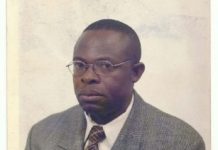
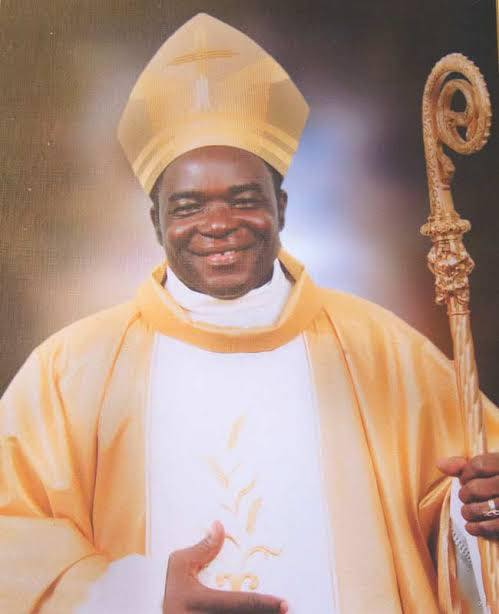
Bishop Matthew Hassan Kukah, revered Bishop of the Catholic Diocese of Sokoto, a towering figure in Nigeria’s spiritual and democratic landscape is an extraordinary clergy.
Kukah was born on Efdom in Zangon Kataf local government area of Kaduna State. Kukah received his primary education at St. Fidelis Primary School, Zagom, then St. Joseph Minor Seminary, Zaria, before proceeding to St. Augustine Major Seminary Jos, Plateau State, where he studied Philosophy and Theology. Kukah was ordained a Catholic priest on 19 December 1976. Kukah also attended the University of Ibadan, where he obtained a diploma in religious studies. Kukah also received a bachelor of divinity at the Pontifical Urban University, Rome in 1976, followed by a master’s degree in peace studies, at the University of Bradford, United Kingdom in 1980. Kukah’s academic pursuits culminated with a PhD from University of London’s School of Oriental and African Studies (SOAS) in 1990.
At some unspecified point, he studied at the University of Oxford, in Oxford, in Oxfordshire, England, United Kingdom, and also at Harvard University, in Cambridge, Massachusetts, in Greater Boston, in the United States.
Between 1999 and 2001 Kukah served as a member of the Nigerian Investigation Commission of Human Rights Violations. In addition to his work as a parish priest of Saint Andrews’s parish in Kakuri, Kaduna from 2004 until his nomination as bishop, he was secretary of the National Political Reform Conference (2005) and from 2005 onwards he has been serving as the chairman of the Ogoni-Shell Reconciliation. Additionally, between 2007 and 2009 he worked also in the committee for electoral reform set up by the Nigerian government.
Bishop Kukah’s legacy radiates through his unwavering commitment to justice, peace, and human development. From his pivotal roles in Nigeria’s Truth Commission, Political Reform Conference, Electoral Reform Committee, to fostering Christian-Muslim harmony as Chairman of Nigeria’s Inter-religious Dialogue, his contributions have shaped Nigeria’s democratic and social fabric.
His global influence shines through his intellectual works and advocacy for people-centered policies, inspiring governance and development across Africa. His compassionate service to the poor and underprivileged remains a beacon of hope, guiding Nigeria toward unity and progress.